For years, automation occupied a fairly well-defined role inside the enterprise. Organizations introduced automation to improve efficiency, reduce repetitive operational effort, and create greater consistency across workflows. Business functions became faster, processing cycles became shorter, and operations became increasingly scalable through automation-led execution.
That transformation created measurable value for enterprises across industries.
What is becoming increasingly visible now, however, is that the conversation around automation is evolving into something much larger than efficiency alone.
Organizations are no longer simply trying to automate tasks. They are trying to create enterprises capable of responding more intelligently, adapting more continuously, and operating with greater contextual awareness across increasingly dynamic environments.
That shift may ultimately redefine the role automation plays inside modern organizations.
Because the real enterprise challenge today is no longer limited to execution speed. It is increasingly centered around responsiveness itself.
How quickly can organizations interpret change?
How effectively can systems coordinate decisions?
How intelligently can workflows adapt as business conditions evolve?
Those questions are beginning to shape the next phase of enterprise transformation.
And this is precisely where intelligent automation becomes strategically important.
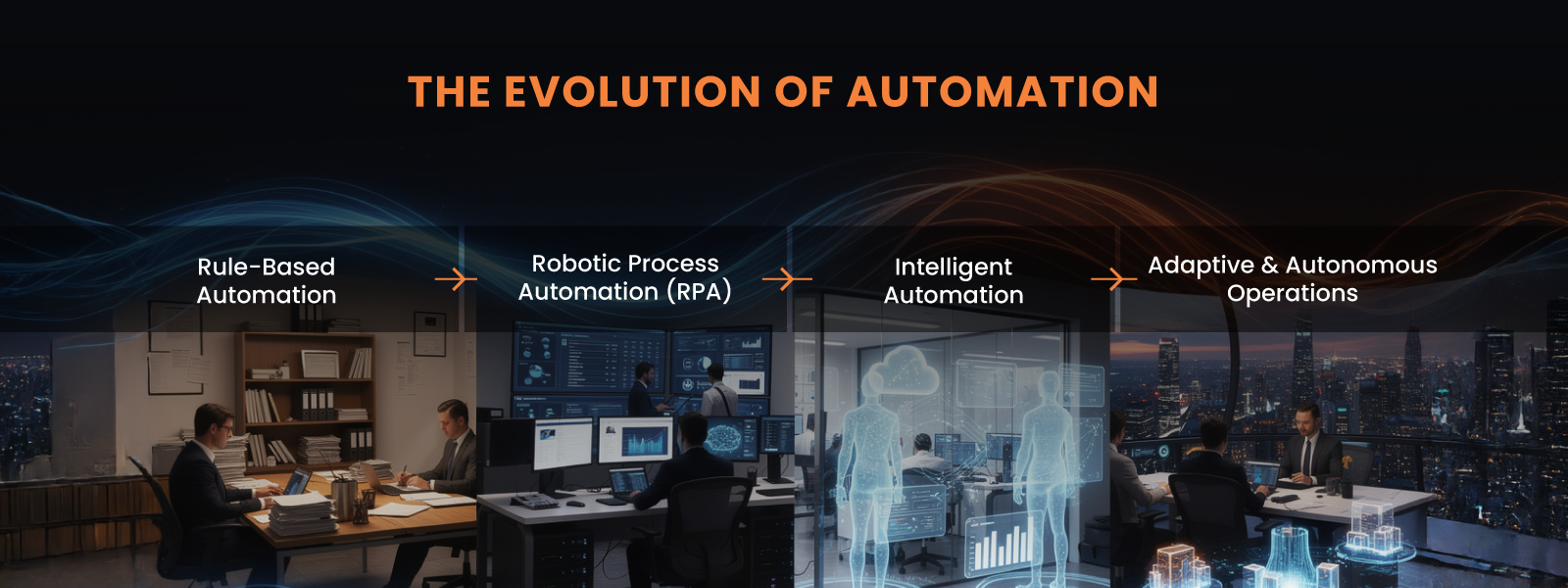
Intelligent Automation is Quietly Reshaping Enterprise Operations
One of the more interesting shifts happening across enterprises today is that automation is gradually moving beyond the workflow layer and beginning to influence how organizations operate more holistically.
Earlier automation models primarily focused on predefined execution. A workflow was automated because the logic was structured, repetitive, and predictable. Success was typically measured through operational efficiency, processing speed, and cost optimization.
Intelligent automation changes that equation significantly.
Today, systems are increasingly capable of interpreting context, processing information dynamically, generating recommendations, orchestrating workflows intelligently, and responding to changing conditions with growing levels of sophistication. This evolution is being enabled by a combination of technologies including Intelligent Process Automation (IPA), AI-powered automation, hyper automation, orchestration platforms, and cognitive workflows that collectively expand how enterprises coordinate operations and decisions.
What enterprises are building is no longer limited to automation.
They are gradually building connected operational intelligence.
That distinction matters because connected intelligence changes how decisions move across the organization itself. Over time, workflows become less isolated, systems become more contextually aware, and enterprises begin developing the ability to coordinate operations with greater responsiveness across functions.
This is a fundamentally different operating environment from traditional automation models.
Why Intelligent Automation Matters More Today
The timing of this shift is important.
Organizations now operate in environments where customer expectations evolve rapidly, data flows continuously across systems, and operational conditions change far more dynamically than traditional enterprise models were originally designed to support.
As a result, efficiency alone is becoming insufficient as a long-term operational differentiator.
Enterprises also need adaptability. Much of the first generation of automation focused on workflow automation and business process automation initiatives designed to improve execution efficiency. While these approaches delivered measurable operational gains, enterprises are increasingly looking beyond task execution toward connected intelligence that can support adaptability across the business.
And adaptability depends on how intelligently systems, workflows, information, and decisions interact together.
This is where many organizations are beginning to encounter an important operational realization.
Despite years of enterprise automation investments, operational responsiveness often remains fragmented across the business.
Systems may be integrated technically, yet decisions frequently remain disconnected contextually. Information exists across the enterprise, but the ability to orchestrate timely responses across workflows, teams, and functions often evolves more slowly.
This creates what many enterprises are now beginning to experience more visibly:
Decision latency.
Not simply delays in execution, but delays in organizational responsiveness itself.
And in environments where customer expectations, operational conditions, and market variables shift continuously, that latency becomes increasingly significant.
This is why intelligent automation is becoming strategically important beyond workflow efficiency alone.
Organizations are now looking for systems capable of supporting awareness, adaptability, orchestration, and responsiveness across the enterprise in real time.
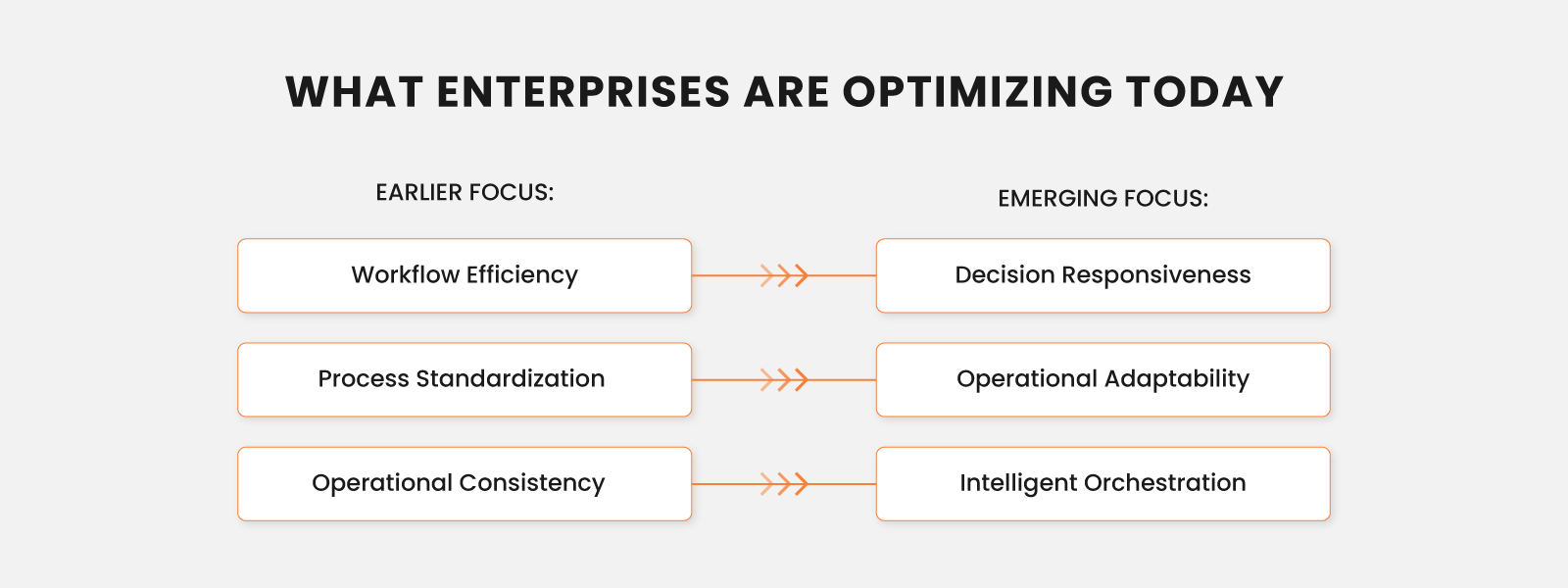
The Automation Paradox
One of the more interesting paradoxes emerging across enterprises today is that organizations can operate with hundreds of automated workflows and still experience fragmented operational responsiveness.
This initially appears contradictory.
After all, enterprises have spent years investing in automation technologies, workflow platforms, and digital transformation initiatives designed to accelerate operations.
Yet many leadership teams continue experiencing operational friction across functions. Visibility remains inconsistent across systems, decision-making becomes fragmented between departments, and workflows frequently move faster than the organization’s ability to coordinate intelligence around them.
That reveals something important.
Automation alone does not automatically create enterprise adaptability.
In many cases, organizations optimized execution faster than they connected intelligence across the enterprise.
That distinction may become one of the defining operational lessons of the next decade.
Because isolated automation scales execution.
Connected intelligence scales adaptability.
And over time, adaptability may become one of the most meaningful competitive advantages enterprises can develop.
How Intelligent Automation is Changing Organizational Thinking
One pattern becoming increasingly visible across mature enterprises is that the organizations creating the greatest value from intelligent automation are rarely approaching it as a standalone technology initiative.
Instead, they are beginning to treat automation as an operational capability that connects systems, workflows, intelligence, data, and decision-making into a more responsive enterprise environment.
That shift changes the role automation plays entirely.
Over time, automation gradually stops functioning purely as a background efficiency layer and starts becoming part of how organizations coordinate operational continuity itself.
Information moves more fluidly across systems.
Workflows become increasingly contextual.
Operational visibility expands across functions.
Decisions become more synchronized with real-time business conditions.
As this maturity grows, organizations begin experiencing something much more valuable than efficiency alone.
Operational fluidity.
And operational fluidity changes how enterprises scale, respond, and evolve over time.
Take customer operations as an example.
Earlier automation initiatives often focused on accelerating workflow execution. Service requests were routed faster, approvals became more streamlined, and support operations gained scalability through automated processing.
Today, enterprise expectations are evolving significantly beyond that stage.
Organizations increasingly want systems capable of understanding customer intent dynamically, identifying urgency contextually, recommending actions intelligently, and orchestrating responses proactively across channels and operational functions.
That transition changes the role automation plays entirely.
It moves automation closer to operational intelligence rather than remaining limited to operational execution.

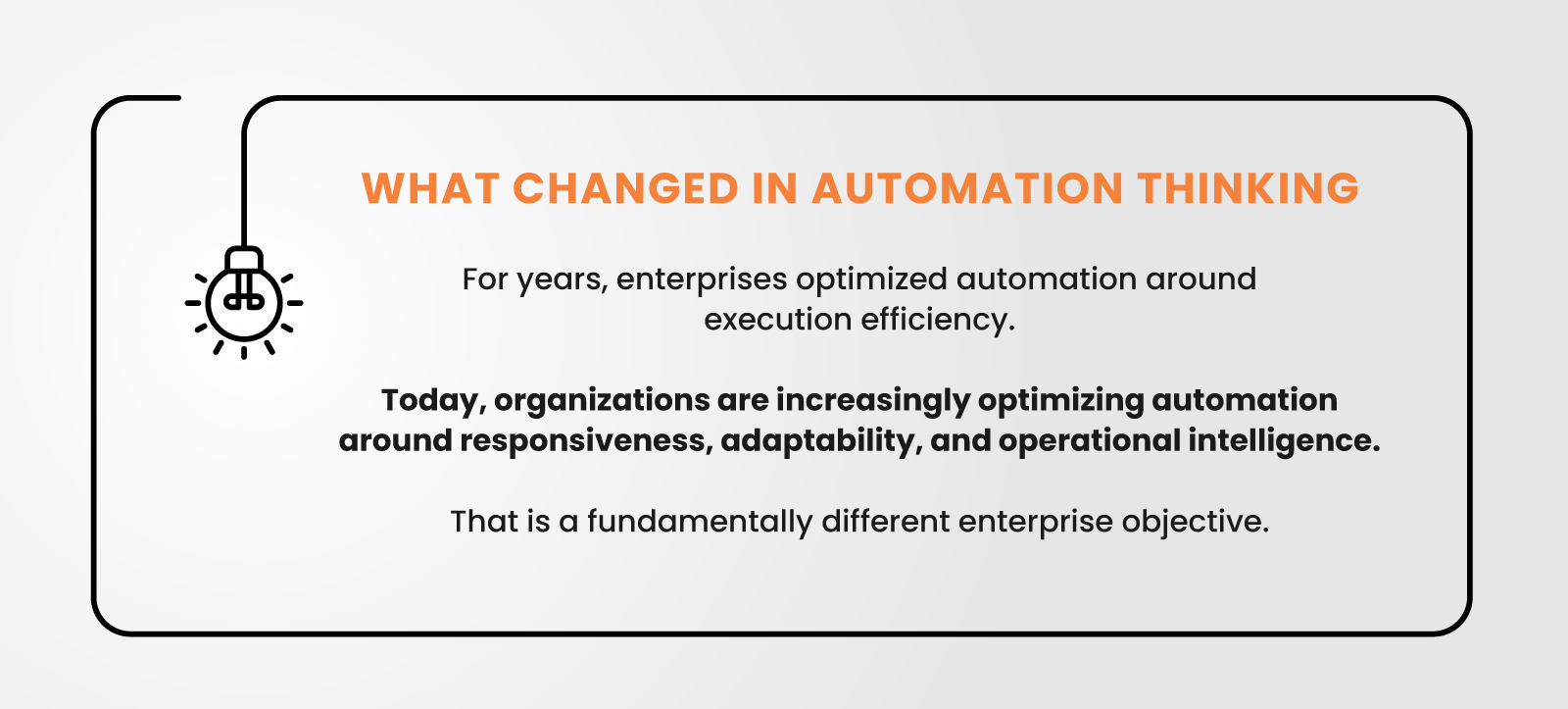
Where Intelligent Automation Creates Real Enterprise Impact
The real value of intelligent automation becomes visible when systems, workflows, and decisions begin functioning as part of a connected operational environment rather than isolated process layers.
This is where organizations begin experiencing enterprise-wide operational shifts.
Processes become more adaptive across functions. Visibility improves across systems. Responses become increasingly contextual rather than predefined. And organizations develop greater continuity between operational awareness and operational action.
Over time, this changes how enterprises coordinate decisions across the business.
That distinction matters because responsiveness itself is increasingly becoming an enterprise capability.
Not simply the ability to execute faster, but the ability to sense, orchestrate, adapt, and respond continuously as operational conditions evolve.
And that capability may ultimately separate organizations that operate efficiently from organizations that operate intelligently.
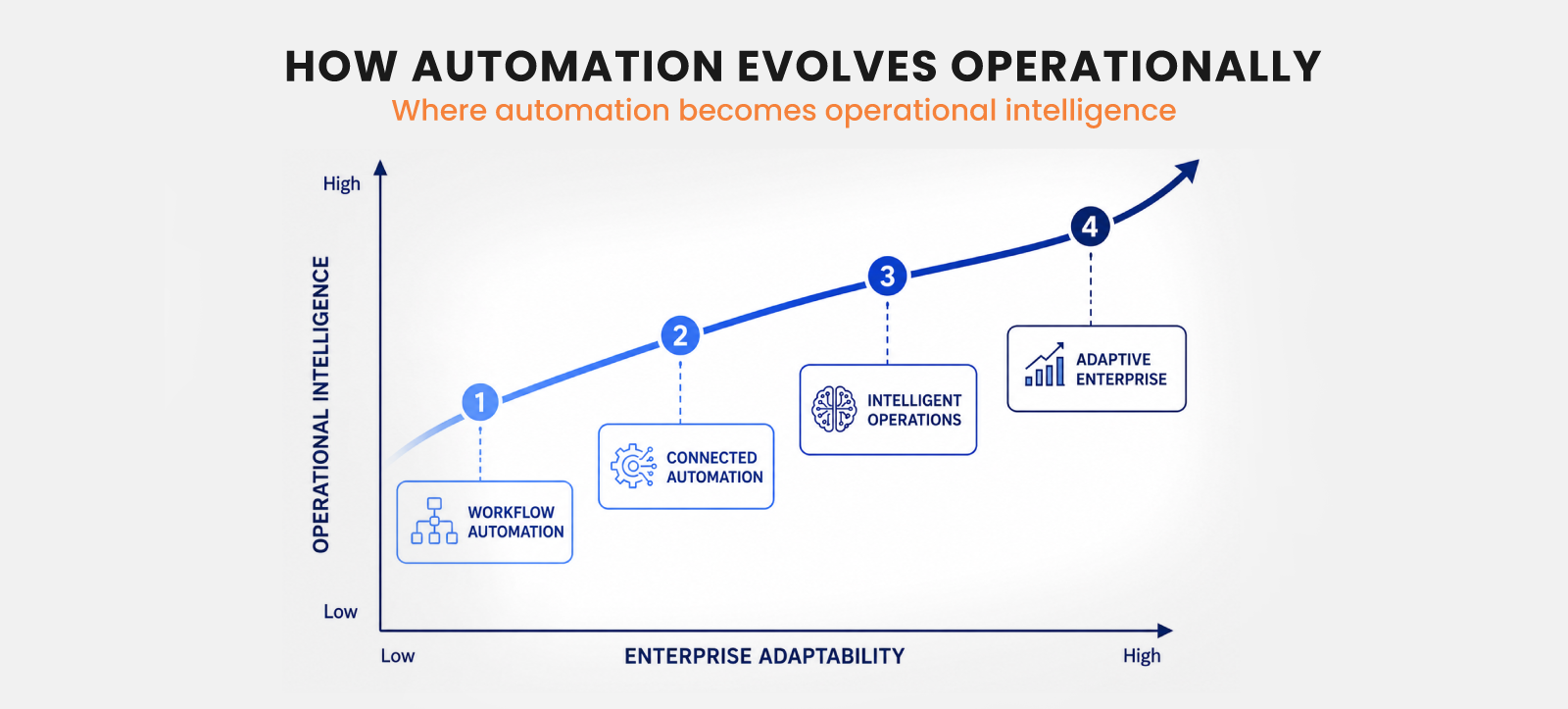
A Perspective Worth Considering
As Satya Nadella once observed, “Every company is a software company.”
Increasingly, enterprises are evolving beyond even that definition.
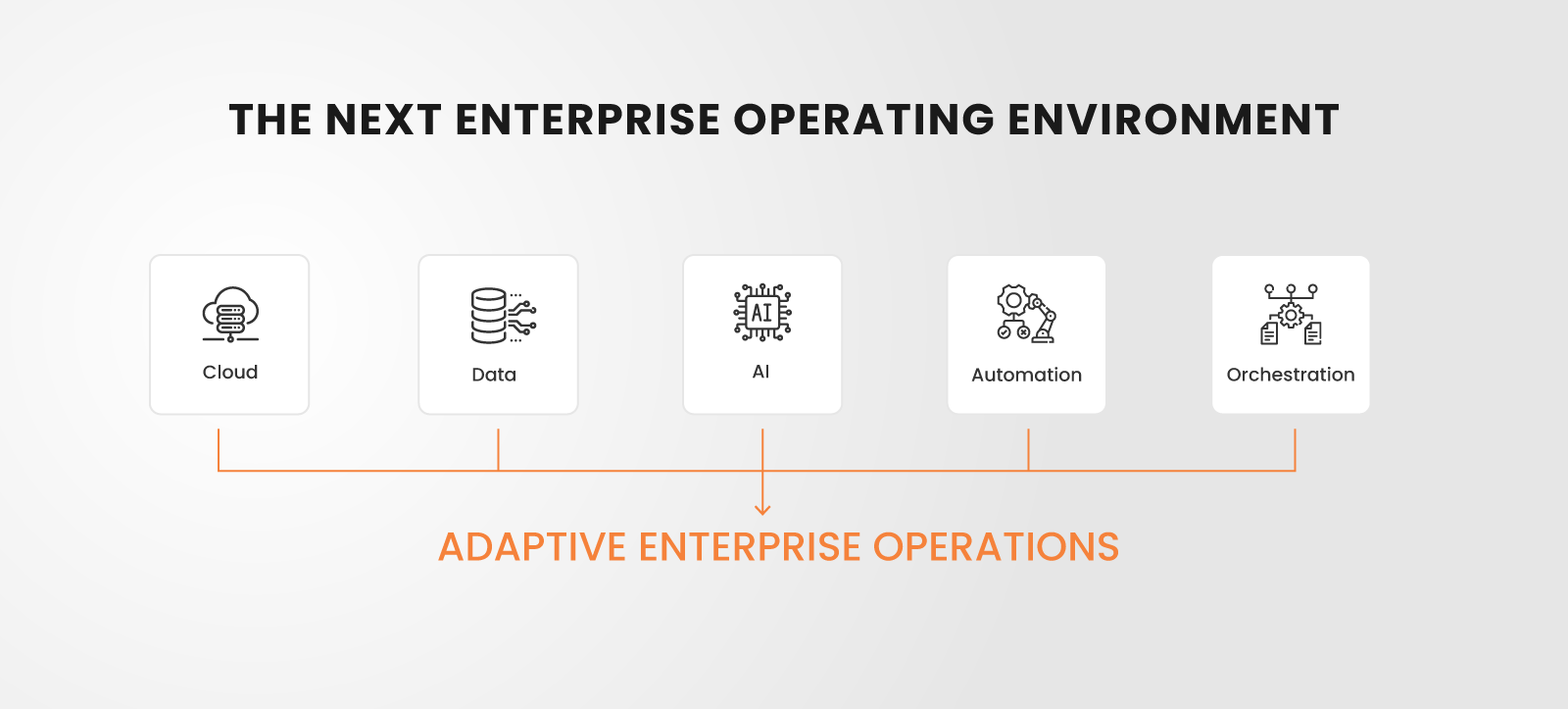
They are gradually becoming intelligent operating environments where workflows, systems, AI, automation, orchestration, and data ecosystems continuously interact to support responsiveness across the business in real time.
And this may ultimately become one of the defining enterprise operating shifts of the coming decade.
AI is Expanding What Automation Can Influence
Artificial intelligence is accelerating this transformation significantly.
Earlier automation systems primarily followed predefined instructions and structured operational logic. AI-powered systems are now becoming increasingly capable of interpreting unstructured information, identifying patterns, understanding intent, generating recommendations, and continuously improving operational workflows dynamically.
This is contributing to the rise of intelligent workflows, AI orchestration, hyper automation, autonomous operations, and increasingly adaptive enterprise operations.
Yet perhaps the more important shift is operational rather than technological.
AI is gradually allowing automation to move closer to enterprise decision environments instead of remaining limited to execution environments alone.
That transition carries profound implications for how modern enterprises will eventually operate.
Because over time, organizations may begin redesigning operating models around responsiveness itself rather than static process structures.
Bringing It All Together
Intelligent automation is often discussed as a technology trend.
Its broader significance is operational and organizational.
Organizations spent years optimizing execution through automation. What is beginning to happen now is more fundamental. Enterprises are gradually optimizing how they coordinate intelligence, orchestrate decisions, respond to operational change, and adapt continuously across increasingly dynamic environments.
That transition changes the role automation plays entirely.
And over time, the next phase of enterprise advantage may come less from how many workflows organizations automate and more from how intelligently enterprises connect systems, workflows, data, decisions, and operational responsiveness together.
NewVision’s Perspective
At NewVision Software, we believe the next phase of enterprise transformation will not be defined by automation volume alone.
It will be defined by how intelligently organizations orchestrate responsiveness across the enterprise.
Because as enterprises become increasingly connected, the ability to sense change, coordinate intelligence, adapt workflows dynamically, and respond contextually across systems may ultimately become one of the most important operational differentiators businesses can build.
Intelligent automation is steadily becoming the operational foundation for that future.
And organizations that recognize this shift early may be significantly better positioned to operate with greater agility, resilience, and adaptability in the years ahead.